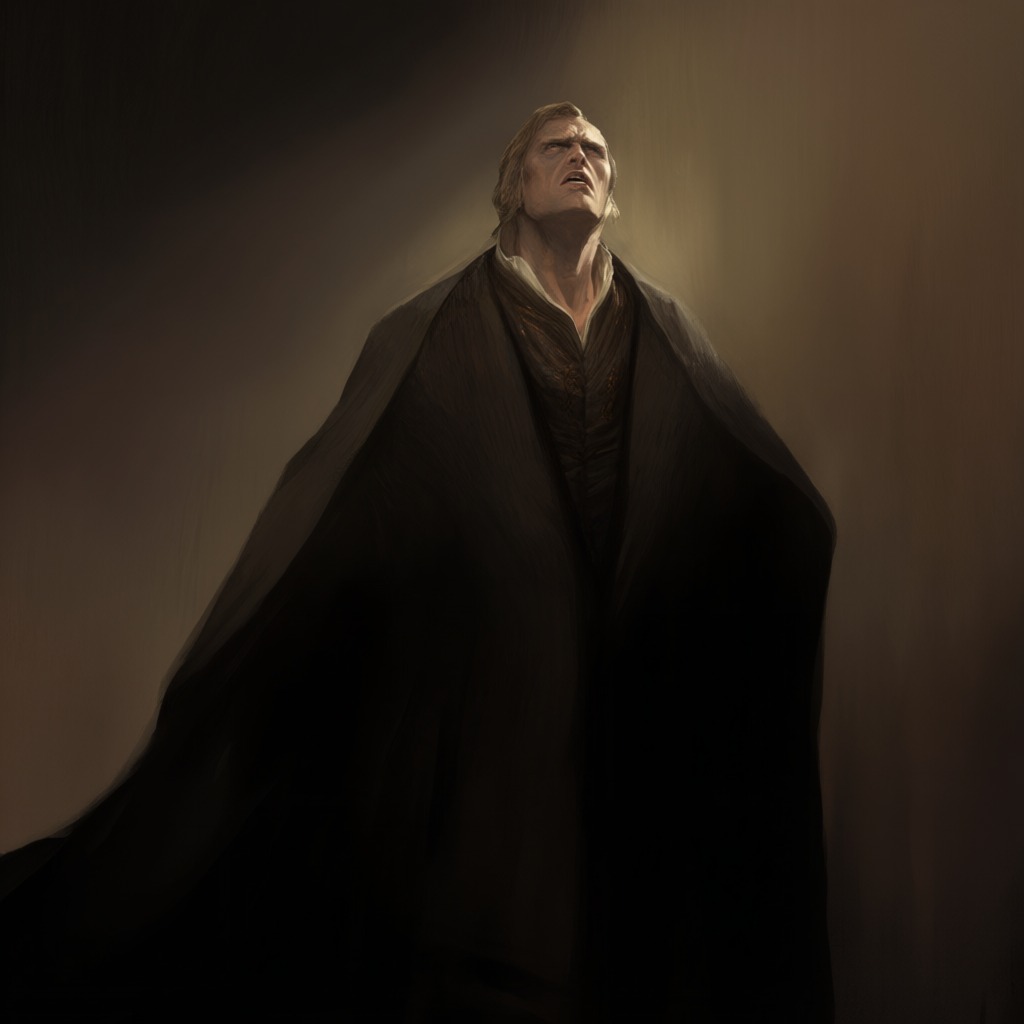
Christ
Christ is the silent, contested center of The Name of the Rose. He never appears as a character, yet his nature, his words, and his example are the ultimate stakes in every conflict—theological, political, and criminal—that unfolds within the abbey. The entire plot, from the debate on poverty to the murders over a lost book, revolves around competing claims about who Christ was and what he intended for the world.
Identity and Theological Significance
Christ is defined in the novel through the lens of medieval scholasticism and heresy. He is the Son of God, the second person of the Trinity, whose life on earth provides the model for all Christian conduct. The central theological dispute concerns his material condition: whether Christ and the apostles owned any property, individually or in common. The Franciscan Spirituals, led by figures like Ubertino of Casale and Michael of Cesena, argue that Christ owned nothing, thereby establishing a rule of absolute poverty for his followers. Pope John XXII, in his decretal Cum inter nonnullos (1323), condemns this proposition as heretical, asserting that Christ did own property. This is not a mere academic quibble; it is a political battle over the Church's right to wealth and temporal power. The Emperor Louis the Bavarian, in his Declaration of Sachsenhausen, uses the Franciscan position to denounce the Pope as a heretic, making Christ's poverty a weapon in the struggle between empire and papacy.
The Question of Laughter
The most explosive question about Christ in the novel is whether he ever laughed. This is not a trivial matter of biography; it is a question about the nature of God and the proper human response to the divine. Jorge of Burgos, the blind librarian, insists that Christ never laughed. He cites authorities like John Chrysostom and the Rule of Saint Benedict, which condemns laughter as foolishness. For Jorge, laughter is a threat to the entire edifice of faith: "Laughter foments doubt" . He argues that if Christ laughed, he would have sanctioned a spirit of mockery that undermines all authority and truth. William of Baskerville, by contrast, argues that laughter is proper to man and that Christ, being fully human, must have possessed the capacity for it. He points to Christ's witty exchanges with the Pharisees and his wordplay with Peter ("Tu es petrus") as evidence of a divine sense of humor. This debate is not merely academic; it is the key to the entire mystery. The lost book that causes the murders is Aristotle's second book of the Poetics, which treats comedy and laughter. Jorge believes that if this book were to circulate, it would teach that laughter is a legitimate tool for understanding truth, thereby destroying the fear of God and the authority of the Church.
Christ in the Debate on Poverty
Christ's example is the central argument in the great debate on poverty that takes place on the fifth day. Ubertino of Casale argues that Christ and the apostles held property only in use, not in ownership, a distinction that allows for absolute poverty. Jean d'Anneaux, representing the Papal position, counters that Christ, as both God and man, was owner of all earthly goods. The debate descends into chaos, with monks shouting scriptural proof-texts at each other. William of Baskerville, in his own speech, attempts to sidestep the impasse by arguing that since Christ clearly did not seek earthly jurisdiction, it is reasonable to believe he preferred poverty. This argument is designed to support the Emperor's claim that the Pope has no temporal authority, but it fails to resolve the theological dispute. The figure of Christ is thus instrumentalized by both sides, his life reduced to a set of proof-texts in a power struggle between empire and papacy.
Christ in the Apocalyptic Vision
Christ also appears in the novel as the apocalyptic judge, the figure of the Second Coming. This is the Christ of the Book of Revelation, whose images dominate the church doorway and the library's labyrinth. Jorge's great sermon on the Antichrist is a terrifying vision of the end times, in which Christ returns to separate the saved from the damned. This apocalyptic Christ is a figure of pure judgment, without mercy or humor. He is the opposite of the laughing, questioning Christ that William imagines. The novel's final destruction of the library, which Jorge himself initiates, is presented as a kind of apocalypse, a burning of the world's knowledge that mirrors the biblical destruction of Babylon. In the end, the only Christ who remains is the one who is absent, the one whose name is preserved but whose reality is lost.
Narrative Role and Evaluation
Christ functions in the novel as an absent center, a figure whose meaning is endlessly contested but never resolved. He is the ultimate authority to whom all characters appeal, yet his actual words and deeds are filtered through centuries of interpretation, manipulation, and conflict. The novel suggests that the "truth" about Christ is not a fixed historical fact but a weapon in a struggle for power. The final line of the book, "Stat rosa pristina nomine, nomina nuda tenemus" (the rose of old exists only in its name; we possess only naked names), can be applied to Christ as well: the historical Jesus is lost, and all that remains are the names and doctrines that humans have created in his name. The novel does not offer a definitive portrait of Christ but rather a meditation on how human beings use and abuse the idea of the divine.